 A sharknado is not a specifically named peril on a standard homeowners insurance policy. But would your insurer pay up anyway if, as in the instant cult classic Syfy TV movie, a giant tornado blew in from the ocean and dumped thousands of man-eating sharks on your neighborhood?
Or, to put it a bit more bluntly, if–in spite of being blown out of its habitat and short of breath–a great white aimed its massive jaws at your left bicep and tore it off, would you get reimbursed?
We asked folks at the Insurance Information Institute, an industry group, for their take on the issue. The considered opinion of several experts, including their chief economist, was yes–for the most part.
“A tornado is a wind event,” says Mike Barry, vice president of media relations. Wind events, including hurricanes, tornadoes, cyclones and other such calamities, are covered under a standard policy. But a falling shark?
“It would be covered, yes, as a falling object,” Barry confirms. In case you were wondering, damage from an errant asteroid would be covered by your homeowners insurance under the same principle.
And if your car insurance included comprehensive coverage, your car or truck would be protected against damage from a sharknado. (Barry notes that comprehensive coverage protects in the event of “contact with animals, such as birds or deer;” but why quibble over details like fur or feathers?)
As for the arm that got munched by that ferocious flying fish, you’d have to file a claim under your health insurance policy. If, however, you owned the shark and it bit someone else, you would be covered by liability insurance through your homeowners policy. From an insurance perspective, it’s not so different from a bite by a really big, finned dog.
What to do afterward
Of course, in the aftermath of a sharknado, there would be so much more to consider. You wouldn’t want all that shark meat go to waste, so you’d need to check out Consumer Reports Ratings of chainsaws and kitchen knives, not to mention freezers. And what better way to celebrate your survival than with a magnificent slab of marinated mako cooked on one of our top-rated grills, accompanied by a cold glass of a best-in-class craft beer?
Read more
 Everyone wants to hit the water now that summer is here. Pontoons, kayaks, sailboats, motorboats, and the like can be found everywhere. As with everything, safety measures need to be in place before your boat hits the water.
- Pay attention to the weather before you head out. No one likes to get caught in a storm. And certainly no one wants to be on the water in a thunderstorm.
- Do you have the proper equipment for your guests and your boat? For boats with engines make sure you have enough gas for a roundtrip.
- Don’t overload your boat. I know it’s going to be hard to keep your guests at a minimum, but if you don’t everyone can be swimming.
- Have lifejackets for everyone. Sure they are big and bulky, but they’ll save lives.
- Don’t drink and boat. Be the designated boater of the party. Everyone will thank you for it.
- Pay attention. I’m sure you wouldn’t want anyone to run into you and the best way to avoid that is by paying attention, cause someone else might not be.
If you are heading out on the water this summer, you need to make sure you are fully insured. Most homeowners insurance policies won’t cover boating incidents.
Contact our office today for a review of your policies.
Content provided by Transformer Marketing.
Sources: http://www.discoverboating.com/beginner/safety/tips.aspx and http://www.coit.com/blog/boating-safety-tips
Read more
 When your insurance company issued your Workers Compensation policy, you paid an estimated premium for the term of the policy. This rate was based on the nature of your business and your estimated payroll. However, once your policy expires, the insurance company conducts a premium audit to gather data about your actual costs for the applicable policy term. If there is any shortfall, you are responsible for the difference between the original estimate and actual premium.
Naturally, you want to keep the difference between the estimated and actual rate as low as possible. Consider the following list of tips:
- Have all necessary records available for the auditor.
- Break down your payroll by classification code so that the auditor doesn’t have to classify any unexplained payroll. Leaving the decision up to the auditor could result in having the payroll placed in the highest classification.
- Separate overtime wages from regular wages. This allows the auditor to discount the overtime wages back to regular wages.
- Exclude tips, severance pay, meal and travel advances and bonuses paid for inventions, because none of these are included in Workers Compensation premium calculations.
- Divide uninsured subcontractor billings into material and labor costs since you are only required to pay premiums for labor. If you don’t have an actual split, figure on 50% for each. One important exception to this is for heavy equipment operators who are employed as subcontractors. In this case, use a third of their total billings as reportable labor costs.
- Don’t include short- or long-term disability payments in the data given to the auditor because these are excluded from premium calculations.
- Be sure to cap all covered officers’ payroll at the maximum for your state.
- Exclude wages paid to employees who are on active military duty because their wages aren’t included in premium calculations.
- Present the auditor with all Certificates of Insurance for covered subcontractors so you aren’t charged for them.
- Classify all employees in the lower-rated payroll classifications if you aren’t sure about where they should be classified. However, you should never deliberately misclassify an employee.
- Be sure you make the auditor aware of all employees who do only clerical work and are physically located away from the shop floor. These employees qualify to be classified in the lower rated clerical codes. If your clerical staff isn’t physically separate from the shop, you should consider changing their work location.
Contact our office for more information.
Content provided by Transformer Marketing.
Read more
 Damage can come in all forms including vandalism. If you don’t act immediately, you can be faced with additional expenses to fix that damage. We have compiled a list of tips you can enact when facing such damage.
- Call a professional. These guys know how to remove the graffiti and vandalism that the vandals have caused.
- Typical household cleaning products will not take care of the damage on upholstered furniture, fabrics, and carpets. The professional will be able to take care of that.
- Go through all of your damage and make a detailed list of everything.
- Leave the chemicals and paints to the professionals.
- If you have shards of glass over your furniture and on the floor, use a shop vacuum to clean that up.
- Don’t touch your electrical equipment.
- If your house has been egged, use water in cleaning it off.
- Any debris on the furniture or interior walls needs to be removed. Do not rub the debris off, only scrape or blot the debris off.
If you have found yourself the victim of vandalism, call the police immediately and then the professionals, so your damage won’t stay permanent.
Content provided by Transformer Marketing.
Sources: Servicemaster
Read more
 Who doesn’t want to have more green in their bank account? As the saying goes, “the more the merrier.” We have compiled a list of all the ways you can save buck-o bucks. Check it out:
- Stop your shopping madness! It’s okay if you miss that sale, there will be others. No, you really don’t need that third blue sweater that looks just like the others. Yes, it is possible to go window shopping and leave your green in your bank. Depending on your shopping habits, you can save thousands each year.
- Learn to make your own lattes at home. With all the recipes out there on Allrecipes.com, I bet bottom dollar that you can learn to make your own homemade lattes. Not only is it cheaper, but have your friends over for your lattes and you may have a following. The average latte costs $4.00 and if you get one every day you work, you can see a savings of $18 a week (per month that is $72!).
- Your car is your baby. Okay, maybe that is a bit excessive, but still you need to take care of your car. Oil changes, replace the filters, and rotate your tires will keep your car running without much expense. However, putting off a simple oil change can cause your car to cost thousands of dollars in repairs.
- Take care of YOU! Yes, you! It is no secret that daily exercise, eating right, and giving yourself a little love boosts your immunity, lowers stress, and gives your overall health a good grade. On the flip side, not taking care of yourself can cost you hundreds of dollars in deductibles for your doctor’s visits and medications.
- Easting fast food. Yes, it too belongs with taking care of YOU. The medical expenses for eating fast food on a regular basis can become astronomical, but aside from the health stand point, you can save hundreds of dollars each month by brown bagging it. The average meal costs around $5 which is $20.00 a week. I’ll let you do the rest of the math for the month.
- Quit smoking now! The theme here is take care of yourself! Both long term and short term costs can be huge. Not to mention that the average pack of cigarettes rests about $5.00.
Making these adjustments to your lifestyle will save you hundreds and potentially, thousands of dollars.
Content provided by Transformer Marketing.
Read more
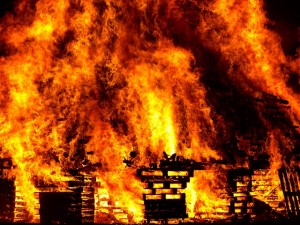 Damage can come in all forms including fire and smoke damage, and water damage. If you don’t act immediately, you can be faced with additional expenses to fix that damage. We have compiled a list of tips you can enact when facing such damage. Today we are going to focus fire and smoke damage.
- Call a professional. Some by-products can cause etching which is irreversible fairly quickly.
- Do not touch anything that has been damaged with your bare hands. Your hands carry oil which can cause additional damage.
- Open up the house and air out any smoke damage, if the outside temperature is warm.
- Do not wash any of the walls that have smoke/fire damage. The wrong cleaning component can cause more damage.
- Clean off your Formica, chrome, porcelain or aluminum fixtures to prevent permanent tarnishing.
- Call a professional to clean up any upholstered furniture and carpets. Don’t clean them yourself.
- Keep away from anything and everything electronic until they have been checked out by and cleared by a professional.
- Replace your air filter on your furnace if you use forced air.
- If your ceiling is wet, do not use any of the fixtures.
- Throw away all food packages that have been opened.
- Any clothing that has been tarnished, send to a professional for cleaning.
- Clean out the refrigerator and keep the doors open, if the electricity is off.
For more information, please feel to contact our office.
Content provided by Transformer Marketing.
Sources: Servicemaster
Read more

 A sharknado is not a specifically named peril on a standard homeowners insurance policy. But would your insurer pay up anyway if, as in the instant cult classic Syfy TV movie, a giant tornado blew in from the ocean and dumped thousands of man-eating sharks on your neighborhood?