 One of the most troublesome environmental issues is water shortage. As the population increases, industries develop, and weather patterns change, the issues of water shortage become more prevalent. The agricultural industry requires a tremendous amount of water to operate and it is in the top industries for water consumption. Everyone knows that crops require soil, sun, and water. In some cases of hydroponics soil in not even utilized, it is solely reliant on water. Since an industry is hinged upon the variable of the existence of water, the insurance industry has developed a form of protection for those in the agriculture industry – agricultural insurance.
Crops are the predominate victim in a water shortage and depending on the crop will determine the sensitive to water issues. Farmers should immediately discuss the specifics of crop insurance to account for potential water shortage issues. Typically, the farmer must select the percentage of the crops covered and at a specific price point. A common range can vary from 50% – 85% of a crop. In order to meet necessary criteria for each crop, there are guidelines specific to time of year, type of crop, and deadlines to applying to obtaining coverage. This is a simple process, but because there are many intricacies it is always advisable to connect with and insurance expert to help navigate individual needs.
The reason for the many variations and deadline surrounding crops is directly connected to the federal laws and regulations that spearheaded the industry to protect farmers and food protection in the United States. Some of the information that is weighed when obtaining the right coverage for water shortage risk are things like the type of harvest, production history, yield, and environmental history. These factors are important in determining type of policy and when reporting of water shortage damage. A specific accounting and log of crop damage is vital to maintaining in line with an agricultural policy, due to the already sensitive nature of crops.
Don’t make the mistake at going at this alone. Contact one of our agents today.
Content provided by Transformer Marketing.
Read more
 The California drought has gotten out of control. That is why a private company stepped up and paid $1 billion for a new desalination plant located in Carlsbad.
The drought has really impacted Southern California within this last year, however, the drought has been drying up some parts of California for years.
What is desalination?
Basically, it’s a sifting process which removes salt and other minerals from salt water that is retrieved from the sea. This process will make the water safe for drinking and irrigation. Desalination is a more expensive process to provide potable water.
Alternatives
There are alternative methods to providing drinking water which are less expensive than desalination. The methods include ground water, which is obtaining drinking water from natural resources including rivers, lakes, and even digging underground for water.
Another method is water recycling. In Orange County, California, water recycling is underway. Since 2008, Orange County has provided residents with billions of gallons of potable water from the recycling facility. By 2015, Orange County will be providing an additional 30 million gallons per day, all thanks to their expansion efforts.
The drought in California has gotten so bad that even wells in Bakersfield, have run dry.
Content provided by Transformer Marketing.
Sources: http://en.wikipedia.org/wiki/Desalination and http://www.slate.com/articles/technology/future_tense/2014/06/desalination_vs_purification_why_californians_will_soon_drink_their_own.html
Read more
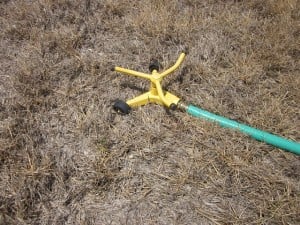 The third consecutive year of drought plaguing California has encouraged unprecedented legislative and regulatory efforts to conserve what limited water the state has in its supply.
Come Tuesday, state officials from the State Water Resources Control Board will meet to discuss plans to impose emergency and temporary water conservation rules and regulations on outdoor water usage, an area state officials view as posing great potential for preserving the coveted liquid.
If passed, the new rules could include a $500 daily maximum fine for “water hogs” and violators, according to the San Francisco Chronicle.
Prohibited activities could include using water to wash down hard surfaces such a driveways and sidewalks; using landscaping water to the point where it would result in runoff, and the washing of vehicles unless the hose has a shut-off nozzle which controls water output.
Flushable toilets at popular state parks such as D.L. Bliss State Park at Lake Tahoe, the Hearst Castle Visitor’s Center, and Hearst San Simeon State Park have been shut down and replaced with portable toilets, according to the Associated Press. Additionally, showers at D.L. Bliss, San Simeon and Portola Redwoods State Parks have also been shut down in an effort to conserve water.
The AP notes that the officials have said the remaining water supply must be preserved for portable water at”This is not about aesthetics,” Gordon said, “as much as public health.” campsites and firefighting.
In San Francisco, city officials have raised concerns over the need to use water to wash off human fecal matter and urine from sidewalks. “We give very high priority to responding to the pee and poop requests,” said Public Works Department spokeswoman Rachel Gordon. This past year alone, San Francisco had 16,164 reports of streets and sidewalks in need of cleaning, the bulk of which concerned human waste, reports the Chronicle.
“This is not about aesthetics…as much as public health,” Gordon said, expressing that city officials have said they will continue giving priority to ensuring human waste is removed from their streets and seek necessary exemptions to use water to carry out the cleaning process.
Content provided by http://www.breitbart.com/Breitbart-California/2014/07/13/California-Drought-Creates-Unprecedented-Temporary-Legislation-Fines
Read more
 The jingle “hold the pickles, hold the lettuce, special orders don’t upset us” may need to include hold the hamburgers too, as drought-related costs have spiked the prices of hamburgers at favorite fast-food restaurants like In-N-Out Burger.
The San Bernadino Sun reports that, according to the U.S. Department of Agriculture, this year beef prices are going to rise 5.5 to 6.5 percent, and poultry should increase 3 to 4 percent. Moreover, fruit, vegetables, and eggs will also increase in price by 3 to 4 percent. Significantly, California grows half of the nation’s fruits and vegetables, but because of the record-setting drought, now in its third year, 500,000 acres of farmland remain uncultivated.
“We make every effort to keep our menu prices as low as possible,” claims In-N-Out’s executive vice president of development Carl Van Fleet. “Unfortunately, we have seen some pretty significant cost increases over the last year, and we had to take a small price increase in order to maintain our quality standards.”
All this boils down to higher prices for the consumer and, for those who are already feeling pinched by the lagging economic recovery, choosing what to order is being reconsidered. Giovanni Benitez, who recently had lunch at an In-N-Out Burger in Pasadena said, “I usually always get a combo, but now I might start buying just the hamburger.”
In-N-Out is not the only retail food chain raising prices. Chipotle Mexican Grill and Starbucks are also increasing the prices on their menus. Both stores are increasing the price of items in the 4 to 10 percent range.
Notably, consumers aren’t the only ones being affected by the fallout of increased water costs due to the drought. A U.C. Davis Center for Watershed Sciences study indicates that the drought could cost California’s agricultural and farm communities $1.7 billion and predicts that 14,500 full-time and seasonal workers will lose their jobs.
Consequently, farmers have started to invest in expensive water drilling equipment to locate underground water sources. CBS5 KPIX reports that independent well drilling companies are booming as a result of farmers looking for alternate sources of water.
Steve Arthur, who has been in the drilling-for-water business since 1974, said that he is booked through March of 2015 for drilling new wells. Steve says, “If farmers are not able to drill a well to keep their crops growing, then they are going to have to quit… The effects of that is going to be devastating. They are going to go into the market one day and a gallon of milk is going to cost ten dollars.”
Content provided by http://www.breitbart.com/Breitbart-California/2014/07/08/In-N-Out-Burgers-and-Chipotle-Tacos-Prices-Rising-As-Ca-Drought-Persists
Read more
 As with any business, agricultural producers face risks of all kinds. However, the two most important risks facing farmers are yield and price. Fortunately, producers can buy insurance that reduces their exposure to low yields or low prices. Unavoidable risks protected by crop insurance include:
* Heat
* Hail
* Drought
* Frost
* Freeze
* Pests
* Excess Moisture
Since the 1930s, crop insurance has been available to agricultural producers in the United States. However, it was in the 1990s that the United States government promoted crop insurance by offering new products and more insurance premium subsidies.
The Risk Management Agency (RMA), is part of the United States Department of Agriculture is the governing authority for the crop insurance program and is in charge of the Federal Crop Insurance Corporation (FCIC). Private insurance companies contract with RMA to service crop insurance sold through independent insurance agencies. As with other disaster insurance programs, such as the National Flood Insurance Program, the private sector sells crop insurance, as the private sector is more efficient and rapidly adjudicates claims.
Crop insurance is unique in that companies selling Federal Crop insurance have a mandate to sell to any farmer, even those who are at high risk, at the same premium set in advance by the Federal government. Even farmers in high-risk drought areas such as California get policies without special underwriting standards or higher premium rates.
Without crop insurance, agricultural producers would have difficulty in achieving financial stability, a more difficult time in getting and repaying loans. Crop insurance allows agricultural producers to help forward marketing.
Essential facts about United States Crop Insurance
* Farmers share in the cost of the program
* Agricultural producers are personally responsible for managing risk
* Under the program, the producer gets tailored risk management solutions
* Quick indemnity pay outs
* The crop insurance program is dynamic; it can quickly adjust and self-correct
* Payments to producers never exceed actual insured losses
* Insurance is allowable collateral for loans
* Growers have no payment limits that cut protection from losses
* Insured growers have the benefit of private sector efficiency
* The program has the flexibility to meet World Trade Organization support limits
The United States crop insurance program provides so much more than just protection from risk. It plays a vital role in keeping the agriculture industry functioning.
Contact our office to make sure you are completely covered.
Content provided by Transformer Marketing.
Sources: http://www2.ca.uky.edu/cmspubsclass/files/cgwalters/Understanding%20Crop%20Insurance.pdf, http://www2.ca.uky.edu/cmspubsclass/files/cgwalters/Understanding%20Crop%20Insurance.pdf, http://www.cropinsuranceinamerica.org/just-the-facts/is-crop-insurance-like-other-forms-of-insurance/, https://www.cropinsurers.com/images/pdf/focus-on-congress/Importance_of_Crop_Insurance_in_the_US.pdf
Read more
 Summertime is synonymous with backyard barbecues and cooling cocktails. Barbecue ribs, sausages, chicken, steaks, burgers, and hot dogs are permanent fixtures on the menu. Just because it’s summer, doesn’t mean that you have to pig out on unhealthy food. In fact, it’s a perfect time to try out some new recipes for the barbecue.
- Make your own homemade popsicles with 100% fruit juice and an ice tray.
- Jazz up your salad. Instead of the same ol’ same ol’, throw in some different greens, add some spice, nuts, and fish. Fresh salmon is a huge hit with a lot of recipes.
- Use more fresh oils. Some favorites are olive oil, grapeseed oil, walnut oil, peanut oils, and sesame oils.
- Drinks lots of H2o.
- Find the season’s best fresh fruit and enjoy. The fruit is also a healthy dessert.
- Cucumbers are versatile. Cucumbers are delicious in salads (think-cucumber and tomato salad) or as appetizers (think-sliced cucumbers with Greek dressing and Feta cheese).
- Grill those vegetables. Vegetables such as bell peppers, onions, tomatoes, asparagus, zucchini are great for grilling.
- Make your own fruit juice.
- Forget the ice cream, get the frozen yogurt. Mixed it up and add more than one flavor.
- Add more fish to your grill.
This summer spice up your grill, menu and health!
Content provided by Transformer Marketing.
Read more