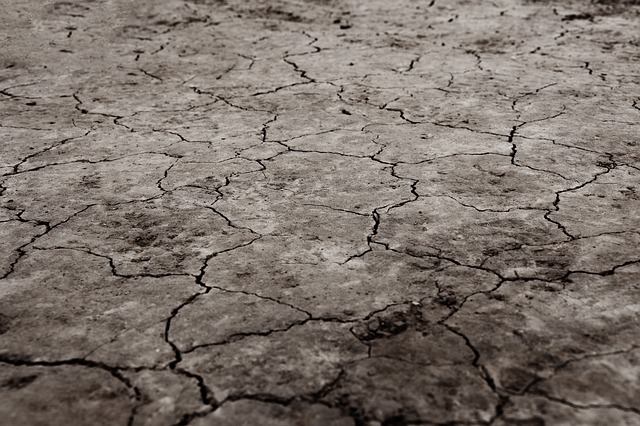
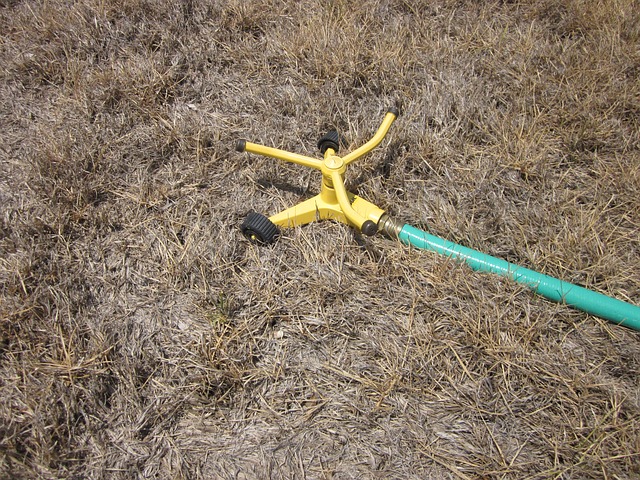
 U.S. states plagued by historic drought are bracing for an early wildfire season with a cost that may rise as high as $1.8 billion, or almost $500,000 more than what’s available to control the blazes.
Oklahomans fought seven fires in May during what is normally the state’s quietest period. Flames scorched four times as many acres in Texas from January through May as in the same period a year earlier. California is also far ahead of its usual pace and is bracing for hundreds more containment battles throughout the most populous U.S. state.
“Drought has set the stage for a very busy and very dangerous fire season,” said Daniel Berlant, a spokesman for Cal Fire, as the Sacramento-based California Department of Forestry and Fire Protection is known. “From Jan. 1 through the end of April, we responded to 1,250 wildfires. In an average year for that same time period, we would have responded to fewer than 600.”
The 2014 season is repeating a pattern of destruction established over the past decade by a combination of high temperatures, parched vegetation and more people living in wooded areas. Fires feeding on plentiful dry grass, brush and hardwood are requiring more personnel and money to bring them under control. More than twice as many acres burned across the U.S. through May 9 this year than during the same period in 2013, according to the Boise, Idaho-based National Interagency Fire Center.
“With climate change contributing to longer and more intense wildfire seasons, the dangers and costs of fighting those fires increase substantially,” Rhea Suh, assistant secretary for policy, management and budget at the U.S. Interior Department said May 1 in a statement.
Diverting Funds
Federal officials expect to spend about $470 million more than the $1.4 billion that’s been allocated, according to a congressionally-mandated report released May 1. Increasing fire costs required the U.S. Forest Service and Interior Department to divert funds from other programs in seven of the last 12 years, the study showed. Millions of additional dollars in state and local funds are spent each year on persistent and ever- increasing blazes.
In Arizona, last year’s record-setting fire season saw 19 members of the Granite Mountain Interagency Hotshot Crew — firefighters who work behind the lines to control the spread of flames — die in the Yarnell Hill fire, the biggest loss of life from a single fire in 80 years. Colorado experienced its most destructive wildfire in history. A conflagration in Yosemite National Park that threatened San Francisco’s water supply became the largest ever in the Sierra Nevada.
Snowpack Low
With snowpack that provides water for a third of California’s farms and cities at only 18 percent of average in some places after the driest year in state history, officials expect to spend $221 million in emergency funds fighting fires by June 30, said Cal Fire’s Berlant.
In a normal year, the agency would start hiring seasonal firefighters this month. Instead, Governor Jerry Brown, a Democrat running for re-election, ordered 125 firefighters hired for the northern part of the state in January and kept seasonal crews in the south on the job longer.
Cal Fire was “never able to transition out of fire season in 2013,” according to a statement. The agency returned to peak staffing in March in San Diego, Riverside and San Bernardino counties, where equipment and facilities are staffed around the clock.
Dead brush and shrubs are drying out faster than usual in conditions more typical of mid-June than May, according to an outlook for May through August compiled by the interagency fire center.
“Fuels should remain critically dry for most of the upcoming fire season,” the report said, and be “receptive to ignition and fires that are highly resistant to control efforts.”
The risk of significant blazes will also come earlier than usual over much of the U.S. northwest, particularly in Oregon and Alaska, the outlook found. Because of substantial snowpack, the fire potential in the northern Rocky Mountains will be below normal, according to the analysis.
Colorado Governor John Hickenlooper, a Democrat running for re-election, said yesterday that several fire-prone areas saw below-average precipitation this winter including the southwest and the southeast, in the grip of an extreme drought.
‘Mitigate Danger’
“It’s up to everyone to make sure they are taking the right steps to mitigate the danger and be prepared,” Hickenlooper said in a statement. “With forecasts and planning, plus the addition of new resources related to wildfire response, we are doing what we can at the state level.”
After record-setting wildfire seasons back-to-back, Hickenlooper signed legislation setting aside almost $20 million to buy two fire-spotting planes and hire four helicopters and four large tankers for the effort.
Triple-digit temperatures that came early this year to the panhandles of Texas and Oklahoma dried grasses on what already looked like a moonscape, said Mark Svoboda, a climatologist at the National Drought Mitigation Center at the University of Nebraska-Lincoln.
Dust Bowl-like conditions in those areas and in southeastern Colorado and northern New Mexico, last seen during the 1930s, are increasing fire risk, he said.
“The droughts in California and Texas and Oklahoma are once-in-a-generation types of droughts with conditions we haven’t seen since the 1970s,” Svoboda said. “In California, the population has doubled since the 1970s, putting more structures at risk and increasing the potential loss due to fire.
Content provided by http://www.insurancejournal.com/news/national/2014/05/13/328902.htm
Read more
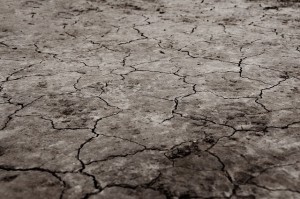 Jose Pineda Rivas could use the cash. He’s got rent to pay, and his tooth hurts so badly he needs to see a dentist.
But these days, money for fieldworkers like Rivas in this drought-parched stretch of California is about as scarce as rain. And the situation is likely to get worse before it gets better.
The 61-year-old farmhand, who lives in a small home with his wife and a friend’s family, is hardly making enough to cover basic expenses, let alone pricey dental work. He thinks he can afford to get his aching tooth removed, he said. But actually replace it?
Not a chance.
As he tipped back his straw hat and morosely gazed at his flip phone on a recent day, Rivas explained that the crew boss at a nearby tomato farm was supposed to contact him about returning to work. But the call hadn’t come.
It’s the same desperate story all over the Central Valley.
Like many fieldworkers in Mendota, a rural community 35 miles west of Fresno dubbed the Cantaloupe Center of the World, Rivas finds his seasonal job of more than two decades at risk of disappearing because of the statewide drought.
Drought leaves field barren
Fields that normally come to life by April with the planting of tomatoes and melons have been left barren due to insufficient water. And that means less farm work to go around.
“Usually this time of year, we’ll all be going out and weeding and laying irrigation line,” Rivas said in Spanish. “None of that work has happened, and who knows when it will?”
A near-record dry winter has put California in the grip of its worst drought in decades. While many parts of the state have yet to feel any real impact – no cutbacks, no stiff rationing – that’s not the case in the farm towns of the San Joaquin Valley, where water is the touchstone of the economy and underpins the region’s standing as the most agriculturally productive in the nation.
About 20,000 farm jobs statewide stand to be lost this year out of 400,000, the bulk of them in the valley, said Jeffrey Michael, director of the Business Forecasting Center at the University of the Pacific in Stockton.
The estimate does not include thousands of additional jobs supporting agriculture: the truck drivers, packers and processors, as well as the merchants, real estate agents and teachers serving these farm communities.
“We know that this year unemployment is going to be significantly worse than it’s been in a long time,” said Michael, whose job loss projections are based on the amount of farmland likely to be fallowed.
The lost work, he added, will only compound hardship that bedevils many valley towns where unemployment rates consistently rank among the highest in the state.
In Mendota, where about half of the 11,000 residents are in families living below the federal poverty line, the jobless rate stood at 37 percent as of the last count in March, according to state data.
The mayor of Mendota suggested that unemployment could hit 50 percent by summer as the effects of the drought fully play out – a level higher than what was seen during the recent recession.
Read the entire article here.
Content provided by http://www.sfgate.com/news/article/California-drought-Jobs-money-dry-up-in-farm-5431129.php
Read more
 Strawberry Commission looks at positive impact of Santa Cruz County’s No. 1 crop.
Watsonville >> California strawberries employ 70,000 people and contribute $3.4 billion to the state’s economy each year.
That’s according to “Sustaining California Communities,” an economic report released Tuesday by the California Strawberry Commission.
The report comes as the harvest of Santa Cruz County’s premier crop begins. More than 240,000 pounds were picked in the Watsonville-Salinas region during the week that ended March 15.
“We want people to understand it’s not just the farmers and their crews out there,” said commission spokeswoman Carolyn O’Donnell. “The community is important to farmers, and farmers also realize it’s important how they integrate with the community.”
Nearly 90 percent of U.S.-grown strawberries come from California. Watsonville-Salinas is the top producer among the state’s four strawberry regions, accounting for 47 percent of the total harvest of nearly 1.8 billion pounds in 2013, according to commission statistics.
The industry spends about $2 billion on wages, equipment and supplies, land and taxes, the report says. It generates another $1.4 billion indirectly through, for example, the restaurants and grocery stores that cater to agricultural workers and the police and teachers funded by the estimated $108 million the industry pays in taxes.
And it’s not just the berry-producing counties on the Central Coast and Southern California. Nurseries in the northern part of the state produce 2 billion plants for transplant in the strawberry fields.
The industry is labor-intensive, requiring a large pool of workers to handpick berries. But mechanics, researchers, educators and forklift drivers are among the thousands who work in berry-related jobs.
The report doesn’t assess costs associated with the industry, such as subsidized housing for low-wage workers. O’Donnell said that would require a more comprehensive and expensive report. But she pointed to the industry’s charitable giving. The report notes as an example, the $2 million in scholarships awarded by the commission to the children of farmworkers since 1994.
Read the entire article here.
Content provided by http://www.santacruzsentinel.com/watsonville/ci_25370176/study-strawberries-boost-ca-economy-by-3-4
Read more
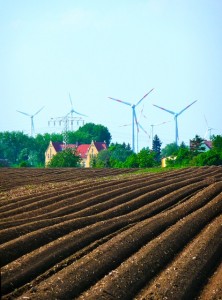 U.S. farmers last week finalized their crop insurance plans for spring planting with critics of the government-subsidized program saying insurers are set up for a bonanza after passage of the new five-year farm bill last month.
Farmers who sign up for crop insurance by March 15 won’t, in fact, enjoy the enhanced subsidies of the new federal law, which go into effect with the 2015 crop year. But grain farmers in 2014 will still see up to two-thirds of their insurance premiums paid for by the government. Private insurance companies will also still benefit from the government as their “reinsurer,” an arrangement critics say limits their losses while boosting underwriting gains. With the new farm bill, the government’s largesse gets even bigger next year. “I think taxpayers lost on that farm bill for sure. There was lots of money that could have been saved to reduce the deficit, but they chose not to,” said Bruce Babcock, an agricultural economist at Iowa State University who has studied crop insurance for more than a decade. “The industry lobbies heavily,” Babcock told Reuters. “It’s just rub my back, I’ll rub yours.” A new farm bill was held up for more than a year by wrangling over cuts in food stamps and subsidized programs for the poor. Backers also touted cuts in direct payments to farmers estimated by the Congressional Budget Office (CBO) at $40 billion over 10 years. But 80 percent of those savings—some $33 billion, according to CBO data—reappear in the new farm bill as “enhanced” crop insurance, reformers say. “The crop insurance program survived essentially unscathed in this farm bill,” said Craig Cox of the Environmental Working Group, which sees U.S. farm policies as wasteful to taxpayers. “This was the first farm bill where there was a lot of attention paid to trying to reform the crop insurance program. None of those reforms made it into the final bill.” Crop insurers, on the other hand, praised the new law. “For the taxpayer, it eliminated direct payments and reduced some of the price support policies of the past in favor of expanding crop insurance, which is purchased by farmers on an individual basis,” David Graves, president of the American Crop Insurance Association, said in a written response to questions. “For crop insurance companies, the farm bill underscored the fact that crop insurance is the top risk management tool for America’s farmers and ranchers.” Read the entire
article here.
Content provided by: http://www.insurancejournal.com/news/national/2014/03/17/323445.htm
Read more
 Our next Second Saturday On The Farm is on Saturday, March 8, 11 am – 3 pm at the Santa Cruz County Fairgrounds, Highway 152 outside Watsonville. This event is FREE! Donations appreciated. Bring your whole neighborhood to participate!
This Second Saturday on the Farm features a scheduled talk on how robots are used in the agriculture industry in Santa Cruz County and around the world, plus LEGO building, robotic car races, programming, drawing a robot, competing sumo robots, hayrides, movies, practice cow milking, and other activities for children.
11:00 am – 3:00 pm: LEGO building, Robotic car races, Programming a BeeBot robot, drawing a robot, Sumo robotics, and other fun activities for children.
1:00 pm – 1:30 pm: Learn to Discover, an educational nonprofit organization, will be discussing Robots in the Agriculture Industry.
Ongoing: Our popular tractor driving, practice cow milking, water pumping, and other fun activities for kids.
Brian and Shelly Laschkewitsch from Learn to Discover will be facilitating many of the fun learning activities about robotics at this event.
Learn to Discover is a 501 c(3) nonprofit that designs, develops and delivers high-quality, hands-on STEAM (Science, Technology, Engineering, Art & Math) courses and activities to kids from pre-school through high-school.
Content provided by http://www.aghistoryproject.org/event/second-saturday-farm-robotics-agriculture/
Read more
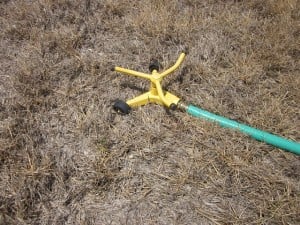 Farmers in California, where Gov. Jerry Brown declared a state of emergency last month, are facing hard choices as a drought threatens to ruin their crops. They must weigh the costs of paying for irrigation against the chance that their fields will never get enough water this season.
A striking picture illustrates the severity of the situation, as Northern California’s Folsom Lake, a reservoir northeast of Sacramento, is seen in January at only 17 percent of its capacity. In July 2011, “the lake was at 97 percent of total capacity and 130 percent of its historical average for that date,” according to NASA.
The federal agency says it is working with the California Department of Water Resources to help the state manage its water resources. Last month, NASA released other images showing the drought’s severity. As NPR member station KQED reported, the state’s snowpack is shown in January 2013 and last month. Much of it did not return.
Here are other updates on the situation:
NASA said today that it’s working to share satellite and weather data with California farmers and water officials to help them avoid wasting water, and to use it in the most efficient way possible. The space agency says a trial run of its Satellite Irrigation Management Support system in 2012 and 2013 “demonstrated sustained yields while reducing the amount of water used by up to 33 percent relative to standard practice.”
Growers of almonds — a state crop valued at $5 billion in 2012 — have been pulling trees out of the ground while they’re still in their prime, in desperate actions driven by high water costs. The AP spoke to a grower who watched crews rip 20 percent of his orchard out of the ground. A man who does that work for a living says business is up 75 percent because of the drought, and his crews are working from sunup to sundown.
Forecasts of rain and snow were welcomed by many Californians, as parts of the state could see more rain this week than they’ve had in the previous eight months together. But Time’s Bryan Walsh warns that even with that rainfall, “much of California will still be below average for precipitation this month. Since February tends to be the wettest month for California, that means that the state still has a larger and larger rainfall deficit to make up if this drought is to ever end.”
Contact Scurich Insurance Services today to get a review of your agriculture insurance.
Content provided by http://www.npr.org/blogs/thetwo-way/2014/02/25/282624536/california-s-drought-a-shocking-photo-and-other-updates
Read more

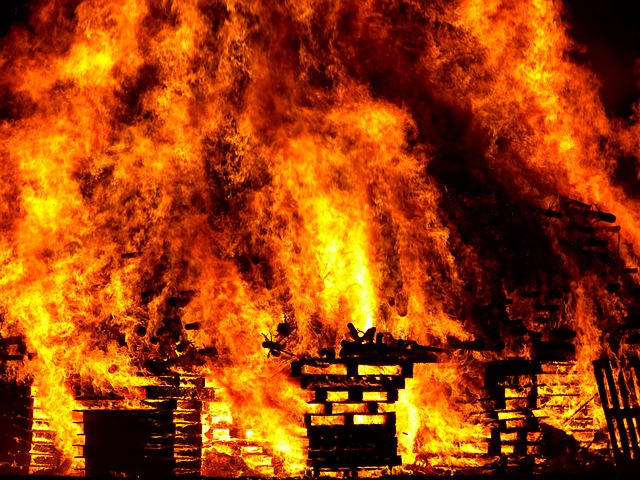 U.S. states plagued by historic drought are bracing for an early wildfire season with a cost that may rise as high as $1.8 billion, or almost $500,000 more than what’s available to control the blazes.